


 English

PTFE Heat Shrinkable Tubing is a specialized protective tubing solution designed for applications that require excellent chemical resistance, low friction, electrical insulation, and reliable performance in demanding temperature environments. Made from polytetrafluoroethylene (PTFE), this type of heat shrink tubing is widely used in electronics, automotive systems, industrial equipment, medical devices, and chemical processing applications.
Compared with conventional heat shrink tubing, PTFE Heat Shrinkable Tubing offers distinctive material properties that make it suitable for protecting sensitive components exposed to harsh chemicals, elevated temperatures, and demanding operating conditions. For manufacturers with specific dimensional or application requirements, custom PTFE heat shrinkable tubing provides greater flexibility in selecting tubing sizes and specifications.
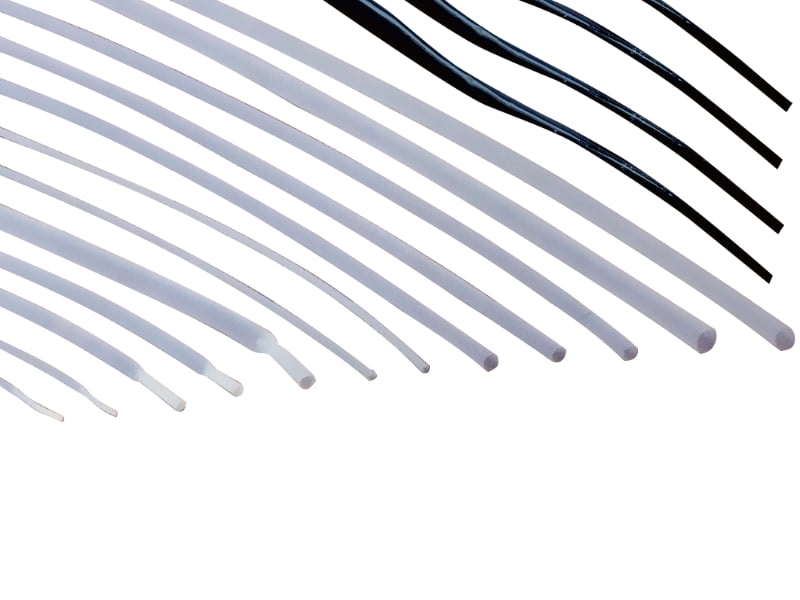
What Is PTFE Heat Shrinkable Tubing?
PTFE heat shrinkable tubing is a heat-recoverable tube made from polytetrafluoroethylene, a fluoropolymer known for its chemical inertness, low coefficient of friction, and broad temperature capability.
When heated according to the manufacturer's specified process, the tubing recovers toward its original dimensions and fits around the component being protected. It can provide a protective barrier for wires, cables, connectors, and precision components.
PTFE heat shrinkable tubing is particularly useful in environments where ordinary polymer tubing may not provide sufficient chemical resistance or temperature performance. However, its recovery temperature and shrink ratio differ from those of standard polyolefin tubing, so installation requirements should always be checked before use.
Key Benefits of PTFE Heat Shrinkable Tubing
High-Temperature Performance
One of the main reasons manufacturers choose PTFE heat shrinkable tubing is its ability to operate in demanding temperature environments. PTFE materials can support high operating temperatures, although the allowable temperature range depends on the tubing construction, product specifications, and application conditions.
For applications involving elevated temperatures, high temperature heat shrink tubing made from PTFE may be an appropriate option. Buyers should distinguish between the continuous operating temperature and the higher temperature required to recover the tubing during installation.
Excellent Chemical Resistance
PTFE offers strong resistance to many acids, bases, solvents, and industrial chemicals. This property makes PTFE heat shrinkable tubing suitable for selected chemical processing equipment, laboratory instruments, and industrial assemblies.
Chemical compatibility should still be verified for the specific substance, concentration, exposure time, and operating temperature involved.
Electrical Insulation
PTFE has useful dielectric properties, making PTFE heat shrinkable tubing suitable for insulating selected wires, terminals, and electrical components.
When used in electrical assemblies, the tubing should be selected according to the required voltage rating, wall thickness, dielectric strength, and applicable industry standards. Not every product is suitable for every high-voltage application.
Low Friction and Non-Stick Properties
PTFE has a low coefficient of friction and a non-stick surface. These properties can be beneficial when tubing is used to protect components that slide, move, or come into contact with other surfaces.
In suitable applications, PTFE Tubing can help reduce friction-related wear and simplify component handling.
Applications of PTFE Heat Shrinkable Tubing
PTFE heat shrinkable tubing is used across several industries where conventional protective tubing may not meet performance requirements.
Electronics and electrical engineering: Used to protect selected wires, terminals, connectors, and sensitive electrical components from abrasion and environmental exposure.
Automotive manufacturing: Applied in selected wiring harnesses, sensor assemblies, and electrical systems exposed to elevated temperatures, oils, or other challenging conditions.
Chemical processing: Used to protect components in environments where resistance to specific chemicals is important.
Industrial machinery: Suitable for selected equipment requiring low-friction protection, electrical insulation, or resistance to industrial fluids.
Medical and laboratory equipment: Considered for compatible components requiring chemical resistance and stable material properties. Any medical application must use tubing that meets the relevant regulatory and biocompatibility requirements.
The final material selection should always reflect the actual working environment, rather than relying on general material properties alone.
Custom PTFE Heat Shrinkable Tubing for Specialized Applications
Standard tubing sizes may not meet every industrial requirement. Custom PTFE heat shrinkable tubing allows manufacturers to specify dimensions and product characteristics according to their components and production processes.
Custom Size Heat Shrinkable PTFE Tubing
Custom size heat shrinkable PTFE tubing can be developed for applications that require particular expanded diameters, recovered diameters, wall thicknesses, or tubing lengths.
When requesting custom dimensions, buyers should provide the following information:
Expanded inner diameter before shrinking
Recovered inner diameter after shrinking
Recovered wall thickness requirements
Required shrink ratio
Operating temperature range
Electrical, chemical, and mechanical performance requirements
Application details and estimated order quantity
Providing accurate measurements helps manufacturers evaluate whether the requested dimensions are feasible and identify a suitable product configuration.
Custom PTFE Heat Shrinkable Tubing Products
Custom PTFE heat shrinkable tubing products can be tailored to specific equipment designs, assembly requirements, and operating conditions. Depending on manufacturing capabilities, customization may include dimensions, lengths, packaging, and selected product specifications.
For OEM manufacturers and industrial buyers, customized tubing can help improve component compatibility and reduce the need for additional modification during assembly.
Before ordering, confirm the available dimensions, minimum order quantity, sample availability, production lead time, and inspection requirements with the supplier.
How to Choose High Temperature Heat Shrink Tubing
Choosing high temperature heat shrink tubing requires evaluating more than the maximum temperature stated in a product description.
1. Determine the Operating Temperature
Identify the normal operating temperature, short-term temperature peaks, and temperature exposure during installation. The tubing must withstand both the intended service environment and the recovery process without damaging the underlying component.
2. Check Chemical Compatibility
If the tubing will contact oils, fuels, solvents, cleaning agents, or other chemicals, verify compatibility with the exact substances and exposure conditions.
PTFE may offer advantages in chemically demanding environments, but the suitability of the complete assembly must also be considered.
3. Confirm the Required Shrink Ratio
The shrink ratio describes the relationship between the tubing's expanded size and its recovered size. A suitable ratio allows the tube to fit over the component during installation and recover sufficiently around the protected area.
Always confirm the supplier's stated ratio and dimensional tolerances rather than assuming that all PTFE heat shrinkable tubing has the same recovery characteristics.
4. Evaluate Electrical Requirements
For electrical applications, consider dielectric strength, insulation thickness, voltage requirements, and relevant safety standards. Tubing selection should be based on the specifications of the complete electrical system.
5. Request Samples for Testing
For critical applications, sample testing can help verify dimensional recovery, installation compatibility, chemical resistance, and performance under actual operating conditions before mass production.
PTFE Heat Shrinkable Tubing vs. Standard Heat Shrink Tubing
PTFE heat shrinkable tubing and conventional polyolefin heat shrink tubing serve different application needs.
| Feature | PTFE Heat Shrinkable Tubing | Standard Polyolefin Heat Shrink Tubing |
|---|---|---|
| Chemical resistance | Excellent against many chemicals | Depends on formulation; generally more limited |
| Temperature capability | Suitable for demanding high-temperature applications, within product limits | Typically intended for lower-temperature applications |
| Surface friction | Very low | Generally higher than PTFE |
| Flexibility | Depends on wall thickness and construction | Available in many flexible grades |
| Recovery temperature | Often requires specialized high-temperature processing | Commonly recovers at lower temperatures |
| Typical applications | Chemical exposure, specialized electrical and industrial protection | General wire insulation, cable bundling, and everyday electrical protection |
The best choice depends on the required operating temperature, chemical exposure, mechanical properties, installation equipment, and overall project cost.
How to Use PTFE Heat Shrinkable Tubing
Correct installation is essential for achieving the intended protection and dimensional fit.
First, measure the component and select tubing with an appropriate expanded diameter and recovered diameter. Cut the tube to the required length and position it over the area that needs protection.
Next, use heating equipment and a controlled process suitable for the specific PTFE heat shrinkable tubing product. PTFE tubing may require substantially higher recovery temperatures than conventional heat shrink tubing, so a standard heat gun may not be sufficient.
Apply heat according to the manufacturer's instructions and protect nearby components from excessive temperatures. Once the tubing has recovered, allow it to cool and inspect the installation for uneven recovery, surface damage, and dimensional conformity.
For critical electrical or industrial applications, verify the finished assembly against the applicable acceptance criteria before placing it into service.
Why Choose a Reliable PTFE Heat Shrinkable Tubing Supplier?
A reliable supplier should provide clear technical specifications, consistent product quality, and support for application-specific requirements.
When evaluating a supplier, consider:
Material identification and traceability
Available tubing sizes and shrink ratios
Operating and recovery temperature specifications
Dimensional tolerances and quality inspection procedures
Customization capabilities for specialized applications
Sample testing and technical support
Relevant certifications and compliance documentation
For custom PTFE heat shrinkable tubing projects, communicating the application requirements clearly can help the manufacturer recommend suitable dimensions and product specifications.
Whether you need standard PTFE heat shrinkable tubing or custom PTFE heat shrinkable tubing products, selecting the right supplier is an important step toward achieving reliable performance and consistent production quality.
Frequently Asked Questions
What is PTFE heat shrinkable tubing used for?
PTFE heat shrinkable tubing is used to protect selected wires, cables, connectors, and industrial components requiring chemical resistance, electrical insulation, low friction, or high-temperature performance.
Is PTFE heat shrinkable tubing suitable for high temperatures?
PTFE offers excellent thermal capability compared with many conventional tubing materials. However, the maximum continuous operating temperature and required recovery temperature depend on the specific product. Always consult the manufacturer's technical data.
Can I order custom size heat shrinkable PTFE tubing?
Yes, subject to the supplier's manufacturing capabilities. Buyers can request specific expanded diameters, recovered diameters, wall thicknesses, lengths, and other requirements. Confirm dimensional feasibility before placing an order.
What is the difference between PTFE tubing and PTFE heat shrinkable tubing?
Conventional PTFE tubing is not necessarily designed to shrink when heated. PTFE heat shrinkable tubing is manufactured with heat-recovery characteristics that allow it to contract under specified conditions. The two products should not be treated as interchangeable.
How do I choose a supplier for custom PTFE heat shrinkable tubing?
Compare technical capabilities, dimensional tolerances, material documentation, sample availability, quality control procedures, and customization options. Provide detailed drawings and operating conditions so the supplier can evaluate the requirements accurately.
PTFE heat shrinkable tubing provides a specialized solution for applications that demand chemical resistance, low friction, electrical insulation, and high-temperature performance. From industrial equipment to specialized electrical assemblies, the right tubing can help protect components and improve reliability.
For projects requiring non-standard dimensions, custom PTFE heat shrinkable tubing and custom size heat shrinkable PTFE tubing offer flexibility in product selection. By evaluating operating conditions, recovery requirements, and dimensional specifications, buyers can identify suitable high temperature heat shrink tubing for their applications.
Contact a qualified manufacturer to discuss your requirements, request technical specifications, and evaluate samples before production.
